
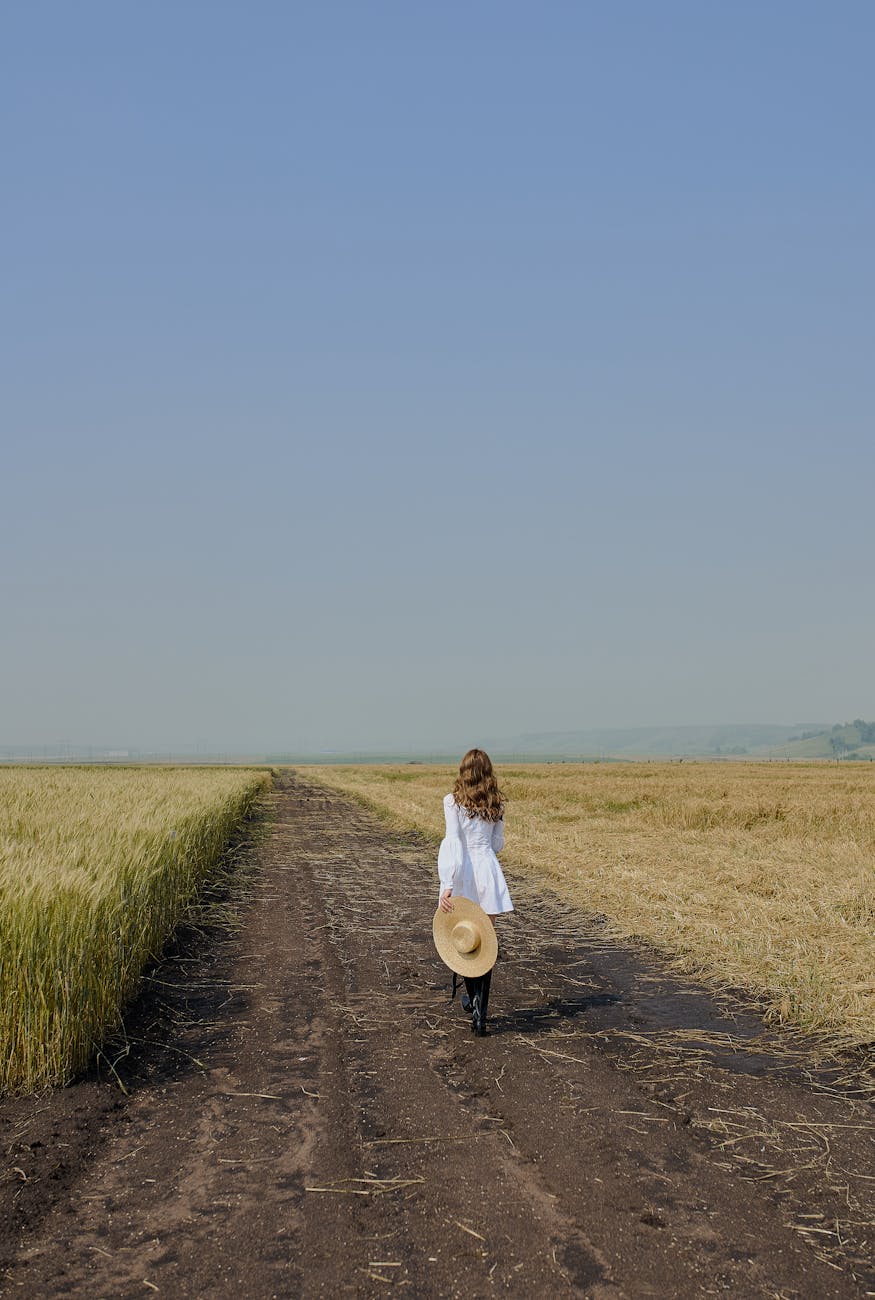
Let’s be honest, the moment someone brings up ageing, a collective shiver usually runs through the room. Heads duck, eyes dart away, and a palpable sense of panic and dread descends. It’s a topic most of us would rather avoid, and when it does take center stage, it’s often framed as an impending doom that would befall us all at one point in our life. If not that, then there are the wrinkles, the rackety popping knees, the aches in places we didn’t know could have pain, the plummeting health, and younger people starting to call us “aunty/uncle” or “encik/mak cik” (Mister or Aunty in the Malay language). I shudder at the last one, can’t quite believe that at the age of where I am now, in my late twenties, I’m already referred to as “Akak” (big sister) when deep inside I feel just as lost, naive and carefree as I’ve always been.
But here’s the thing: it’s not all bad. While there’s no denying that some aspects of ageing can, well, suck – a sentiment I’m sure many of you would agree with – it also possesses a surprising number of finer qualities if we just allow ourselves to shift our perspective.
I’ve been doing some reflecting lately, and I’ve come up with my top four reasons why getting older isn’t just about the grey hairs and creaky joints. In fact, it might just be a journey worth embracing.
Not caring as much about what people think of you
Forget fleeting trends and the endless pursuit of looking “perfect.” As we get older, a welcoming truth emerges: comfort is the new fashion. The days of sacrificing ease for appearances slowly fade into the background. How you look or behave in public becomes secondary to what you need to do to simply get things done.
This shift isn’t just about slipping into comfier clothes; it’s a profound internal recalibration. The weight of potential judgment from others begins to lift. You find yourself more easily shrugging off external opinions because, frankly, you know yourself so much better than before. You reach a point where you realize, “Hey, whatever works for me, goes.” For perhaps the first time, you’re genuinely prioritizing yourself, and it feels right.
This newfound self-acceptance extends to our body image. The relentless pressure to conform to societal ideals lessens its grip. Instead, we become more inclined to embrace our bodies for what they are, with open arms and a deep sense of gratitude. It’s a powerful and freeing evolution, one that truly defines the upside of growing into ourselves.
Wisdom is in the house
Okay, I’ll be the first to admit it: I’m only in my late twenties. This means I haven’t quite experienced life in all its glorious highs and challenging pitfalls just yet. But even from this vantage point, I’ve certainly seen my share. And what I’ve noticed, even at this relatively “young” age, is a definite shift.
I’ve become significantly better at understanding and adapting to different people and their social needs. While life in your twenties can still be a whirlwind of chaos, and people continue to come in all their wonderfully bizarre forms, there’s a newfound patience that starts to settle in. You gain better control over your reactions. It’s like you’re building a mental library of experiences, perspectives, and past interactions that equip you to manage your actions more thoughtfully.
Sometimes, without even being consciously aware of it, age makes us more equipped to put things into perspective. The things we’ve experienced, the words we’ve said, heard, and done – they all contribute to a richer internal landscape. This allows us to pause, process, and then react, rather than impulsively respond. And that, is the quiet, often unacknowledged, emergence of wisdom and maturity. It’s a subtle but powerful change that makes navigating the world a little smoother, not just for us, but for those around us who might look to us for guidance or simply enjoy our company.
Your taste in reading evolves to other areas
If you’ve read my recent posts, you’ll get the idea that I love reading. In fact, at one point, I used to only gorge on fiction books for days on end. Poetry, non-fics, memoirs and essays felt dry and boring. But as the years have, shall we say, matured me, something has shifted. I’ve found myself increasingly drawn to peering above my book and into the real world, eager to explore it for all its intricate beauty, complexity, and even its harsh realities.
Right now, my obsession lies firmly with history, particularly that of Southeast Asia, my home. Our school textbooks, always felt a little… glazed and sugar-coated. They seemed designed to sanitise the actual historical events – both their profound beauty and their undeniable horrors – to fit neatly into an acceptable curriculum module. I’m craving something more, something that allows me to look beyond those simplified narratives and truly understand what life was really like from then until the present day.
To kickstart this fascinating journey, I’ve recently devoured two books that I believe are already expanding my perspectives. They are “The Myth of American Idealism: How U.S. Foreign Policy Endangers the World” and “Revolusi: Indonesia and the Birth of the Modern World.” Both are proving to be powerful starting points in my quest for a more authentic understanding of our shared past.
You sleep better
Ah, sleep. I could ramble on about it for days, because for the longest time, it felt less like a friend and more like a perpetually misunderstood acquaintance. In my early twenties, my sleep schedule was, to put it mildly, volatile. One moment, I’d be clocking in steady, predictable hours; the next, I’d be burning the midnight oil until 3 or 4 AM, either lost in a book or frantically trying to meet assignment deadlines. It simply wasn’t a priority for me. And maybe that’s why, if genetics aren’t entirely to blame, I’ve been blessed with the darkest dark circles known to humankind. Seriously, colour correctors and concealers don’t even stand a chance.
Things certainly didn’t improve during the COVID-19 pandemic. Two years of lockdown proved to be a paradoxical blend of the best and worst of times, and my anxiety spiked significantly. Being chronically online meant sleep became an even more elusive concept.
Yet, somehow, I’ve found myself in a much better place. Now, by 10 PM, I’m practically sleepy like clockwork, and I’m fully awake and energized by six the next morning. It’s a small victory, but a profound one. I’ve become much better at convincing myself that there’s always something to do, and crucially, there’s always time to finish it after a good night’s sleep. It’s amazing what a little perspective (and a lot of perseverance) can do for our relationship with rest.
 wanywhiskers.com
Leave a comment